Łukasz:
How to Avoid Title Deed Problems in Cyprus
Buying a home in Cyprus is a dream for many, but chilling stories circulate online. People who bought properties 20 years ago still aren’t their formal owners today. You hear about developments without access roads or homes seized by banks over a developer’s debts.
Are these just legends? Unfortunately, no. From my experience and observations, problems with Title Deeds are real, but they can be avoided if you know what to check before signing a contract. I’m not a lawyer, but I went through the process of building my own house and I’ll share what I know.
📜 What is a Title Deed and why is it so important?
A Title Deed is the only document that confirms a given property actually belongs to you. Without it, in the eyes of the law, the owner of the land and the house standing on it may still be the developer… or the bank where the developer took out a loan.
Why don’t so many people in Cyprus have this document? From what I’ve heard and seen, the main reasons are two:
- Unauthorized construction: Someone built a house without a permit or - more commonly - legally started construction but “slightly” changed it along the way (added a room, enclosed a garage, expanded a terrace) without notification. The authorities won’t approve such a building, so a Title Deed won’t be issued
- Developer’s debts: The developer took a loan for building a development. Even if you paid 100% of the house price, but they didn’t pay back the bank, the mortgage weighs on the entire investment. In the worst case, the bank can claim your home
🏗️ How to buy safely? Our strategy: Land ownership first
When buying from the primary market (from a developer), you have two paths. One is risky, the other - which we chose - is much safer.
A common practice is buying a “hole in the ground,” where the landowner throughout the entire construction period remains the construction company. If they go bankrupt - you have a problem. I’ve heard of cases where a developer collapsed or went to prison, leaving a development without, say, a paved road or utilities. Residents were left with unfinished homes and no infrastructure.
What did we do?
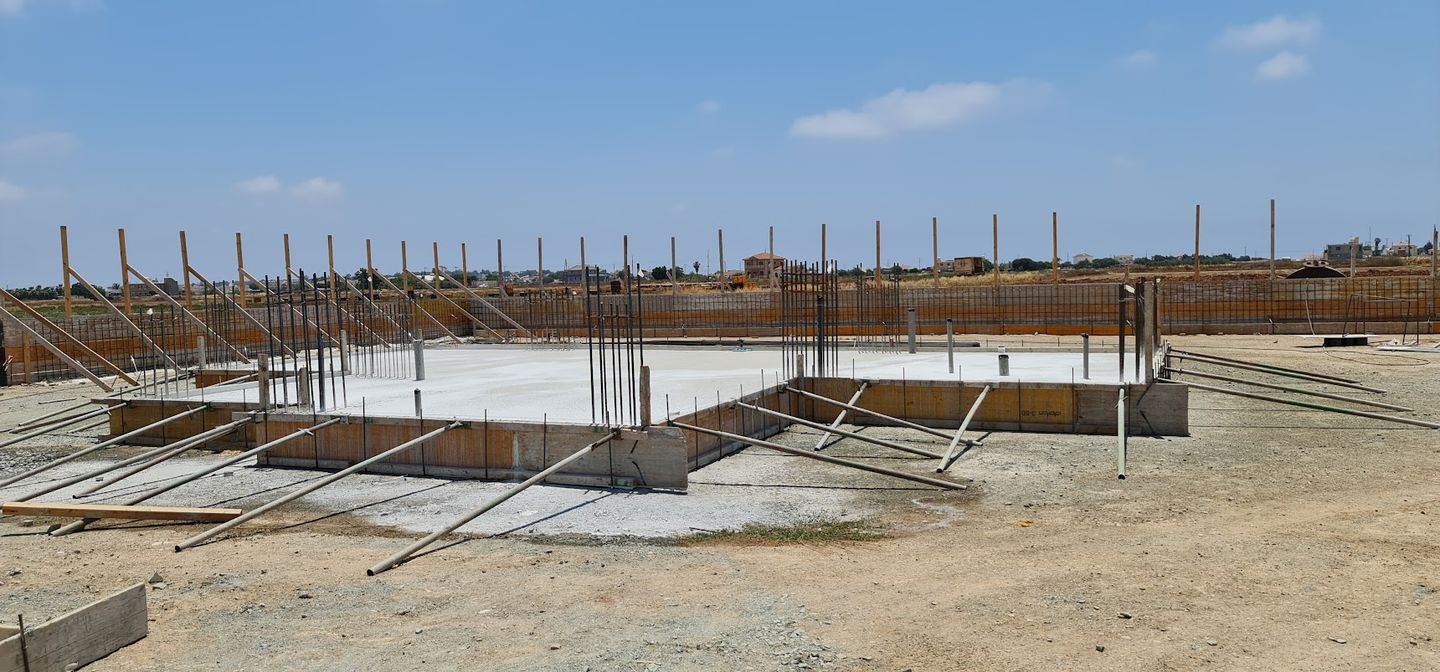
We decided to buy just the plot from the developer.
- First, we finalized the land purchase - this meant the Title Deed for the land was immediately in our name
- Only then did we sign the contract for building the house
- Payments were made in installments - we only paid for completed stages of work
Tip: This model gives enormous security. Even if the construction company went bankrupt mid-project, the land and whatever already stands on it is yours. You can hire another crew and finish the build.
⚖️ Lawyer and engineer - the principle of limited trust
This is the most important piece of advice I can give you: Always have your own, independent lawyer.
In Cyprus, you’ll often encounter a situation where the developer or real estate agency says: “We have a great lawyer, they’ll charge less and do it faster.” Don’t go that route. On such a small island, connections are everywhere. A lawyer recommended by the developer is often their good friend, cousin, or family member. If problems arise (e.g., the developer’s encumbered mortgage), whose interest will such a lawyer represent? Yours or their cousin’s?
Our (independent!) lawyer checked for us:
- Whether the plot was “clean” (free of debts and mortgages)
- Whether the construction contract protected our interests
The same applies to the supervising engineer (Civil Engineer) - it’s better to hire someone external who’ll keep an eye on the builders. A practical guide on building a new house is here.
🎰 Final Approval Certificate - a lottery at inspection
To get the coveted Title Deed for a finished house, the building must pass inspection and receive a Certificate of Final Approval.
What does this look like in practice? Like most things in Cyprus - it’s a lottery. There’s no uniform standard. Everything depends on which official you get:
- One will come, take a quick look, wave off minor deviations, and stamp the approval
- Another will pull out a tape measure and nitpick every centimeter that doesn’t match the plans
Is it worth making changes “on your own”?
My advice: Stick to the project. Many people are tempted to convert a pergola into a full roof or enclose a terrace during construction. I wouldn’t recommend making such modifications before the inspection. The risk of getting an official who blocks the certificate is too high.
Only after receiving the Final Certificate does the so-called “free-for-all” begin. People then often add various things and nobody really checks - though you should be aware that in the future (e.g., when selling), someone might take issue. But at the construction stage - better not to risk it.