Łukasz:
Air Quality - A Good Reason to Think About Cyprus
Walking through a Polish city in winter, you often don’t need to look at your phone to know the air quality. You feel it in your throat, see it in the fog that isn’t natural, and smell it on your clothes when you get home.
Many of us treat this as a “charm of the climate,” but when we look at hard data and World Health Organization (WHO) standards, the picture stops being merely inconvenient - it becomes alarming.
📊 Poland in winter: A red stain on the map of Europe
The smog problem in Poland isn’t limited to Krakow or Silesia. In winter, due to so-called low emissions (heating with coal stoves) and specific terrain, almost all of Poland turns into a dark red spot on air quality maps.
This isn’t a phenomenon that disappears after an hour. It’s a condition that lasts for months. Here’s what the numbers look like compared to what WHO considers safe for health:
| Parameter | WHO Standard (24h avg) | Poland (standard winter day) | Cyprus (annual avg) |
|---|---|---|---|
| PM2.5 (most dangerous dust) | 15 ug/m3 | 50 - 150 ug/m3 | 10 - 15 ug/m3 |
| PM10 (larger particles) | 45 ug/m3 | 80 - 200 ug/m3 | 20 - 35 ug/m3 |
On the worst days in Polish cities, PM2.5 standards are exceeded by 1,000% or more. This is dust so fine it penetrates directly into the bloodstream, straining the heart and lungs every day.
🧪 Poison vs sand: What are you really breathing?
I often hear the question: “But you have dust in Cyprus too, right?” Yes, that’s true. Cyprus deals with Saharan dust several times a year. However, there’s a fundamental difference in what these phenomena mean for your body.
Polish Smog: It’s a mix of toxins. It contains heavy metals and carcinogenic benzo(a)pyrene. The annual standard for this substance is 1 ng/m3, and in many Polish regions it’s exceeded multiple times (by 600-1,000%). You’re breathing combustion products of coal, wood, and unfortunately, garbage.
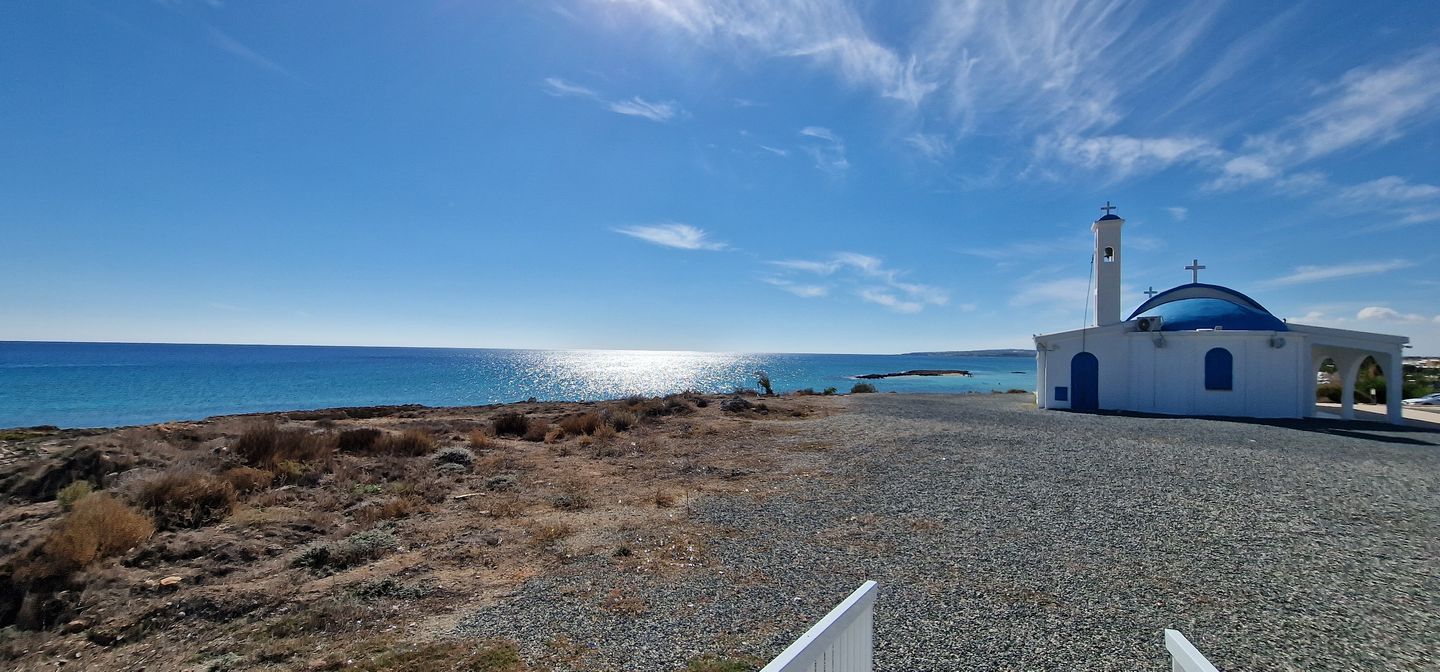
Cypriot Dust (Dust Events): This is a natural phenomenon. It’s mineral dust (silica, clay, gypsum) from the desert. While it’s bothersome for allergy sufferers and people with asthma, it’s not a chemical poison. It appears for a few days and disappears, blown away by the sea breeze. More about how wind affects daily life on the island is described by Konstantina. For the remaining 340 days of the year, the air in Cyprus is nearly crystalline thanks to constant circulation from the sea.
🌊 Living without the “taste” of air
Moving to Cyprus changes your approach to health in a way you don’t notice immediately. Only after some time do you realize that:
- you stopped coughing in the morning after waking up
- your children get fewer upper respiratory infections. For families with children, this is one of many arguments for Cyprus
- you don’t need to check the AQI app before opening the bedroom window
In Cyprus, luxury isn’t gold or expensive cars - luxury is that a deep breath in the morning actually benefits you rather than harming you. It’s “health in the package” that comes with choosing where to live.
There are many reasons to live on the island of Aphrodite: taxes, sunshine, food. But air quality is an argument you can’t ignore, because it directly translates to the length and comfort of your life.
Polish winter teaches us resilience, but it’s worth asking yourself: do we really need to test it on our own lungs when just a few hours by plane you can breathe freely? More reasons why living in Cyprus is worth it are here.