Konstantina:
Olive Oil in Cyprus - Tradition and Everyday Life
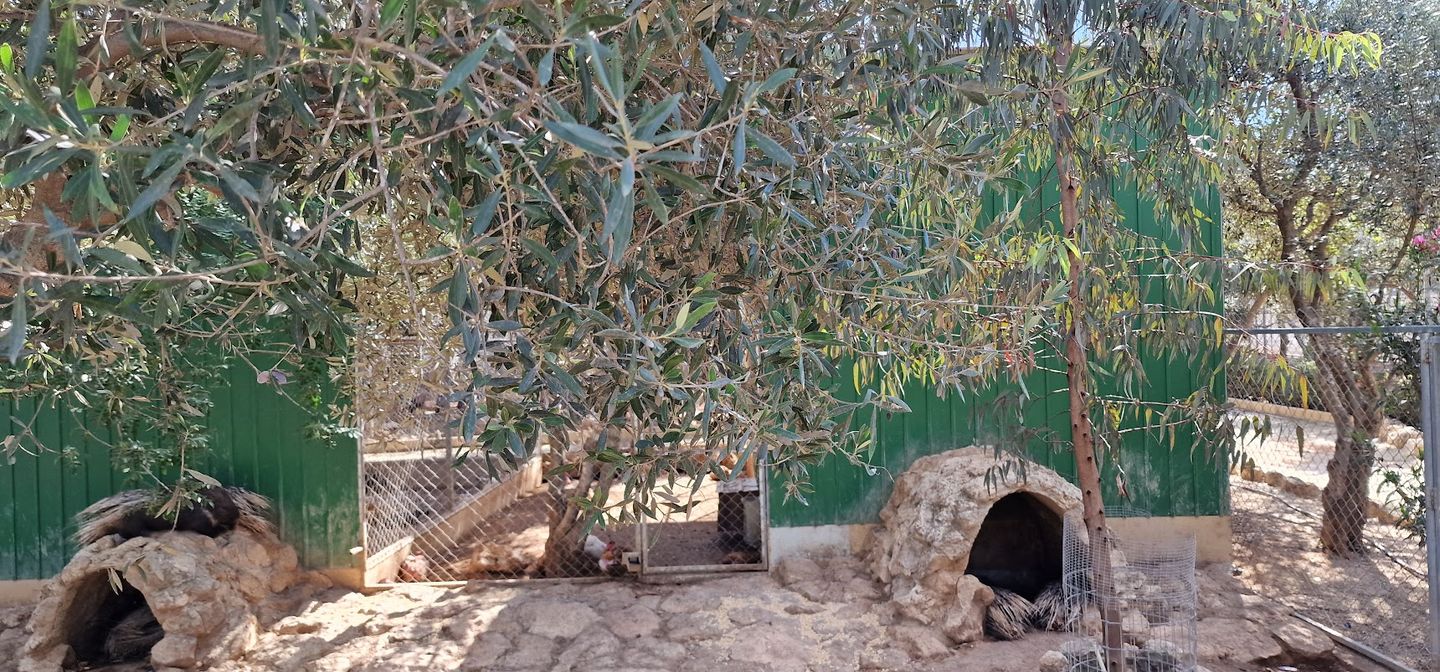
When we were renting a house in Frenaros, there were a few olive trees growing on the plot. The landlord said: “pick as many as you want”. And so every December or January we’d spread nets under the trees, shake the branches, and gather olives as a whole family. Cold mornings, the smell of earth and leaves, kids running between the crates. For Lukasz it was a completely new experience - in Poland you buy olive oil in a bottle and that’s it. For me it was a natural part of island life, even though I hadn’t done it myself before.
🫒 What the olive harvest looks like in Cyprus
In Cyprus, olives are harvested from October to January, depending on the variety and region. Many families in the villages have their own trees - sometimes a few, sometimes an entire field. The process is the same everywhere:
- you spread nets under the trees
- you shake the branches or pick the olives by hand
- you collect them in crates and drive them to the elaiotrivio (local oil press) the same day
We used to take our olives from Frenaros to a press nearby. The smell there is indescribable - rich, intense aromas of freshly crushed olives. You wait your turn, watch the olives go under the press, and finally see a golden-green stream of fresh oil. The first sip straight from the press - sharp, peppery, incredible.
From our few trees we didn’t get much - a few litres per season. But the taste of fresh oil that you harvested yourself is completely different from anything in a shop. For the rest of the year we buy more - but always Cypriot.
🍳 How we use olive oil every day
When I say olive oil goes on everything in our house, I really mean everything except cakes:
- salads - olive oil and lemon juice is our default dressing
- braising vegetables and meat - never with butter
- frying - yes, we fry with olive oil (I know this raises eyebrows in Poland)
- grilling - we brush meat and vegetables with oil before and after
- voutii - bread dipped in olive oil with a splash of vinegar. It’s a dish in itself
Butter? Sunflower oil? Rapeseed? These simply don’t exist in our kitchen. Olive oil is the flavour base of everything we cook. Lukasz couldn’t get used to it at first (in Poland grocery shopping includes all kinds of oils), but now he says he can’t imagine going back to butter in a frying pan.
🏆 Cypriot vs imported - there’s no debate
Most Cypriots buy local olive oil. If we don’t have our own from family, we go to the shop for Cypriot or Greek oil. Italian or Spanish? Maybe on pizza at a restaurant, but not for the home.
The difference is huge. Our oil is:
- more intense in flavour (sharper, more peppery)
- more aromatic (you taste olives, not neutral fat)
- thicker than many imported oils
Foreigners who move here always comment on it. They say they “only tasted real olive oil once they got to Cyprus”. For us it’s just normal - but it’s nice to hear that others appreciate what we’ve been eating all our lives.
🌿 Why olive oil is so deeply rooted in our culture
Climate. Hot, dry summers and mild winters are ideal conditions for olive trees. They’ve been growing here for thousands of years - literally. Archaeologists have found ancient olive presses in Cyprus dated to 4,000 years ago.
Tradition. Olive oil has always had uses beyond the kitchen here - in churches, in folk medicine, in skincare. To this day, older women in the villages rub olive oil on burns or dry hair.
Family. When you harvest oil from your own trees or receive it from loved ones, it’s not a “product” - it’s a symbol of family continuity. You know where it came from, who picked it, how much work went into it.
Health. The Mediterranean diet relies on olive oil as the primary fat source. Cypriots take this seriously - not as a trend, but as a way of life.
💰 How much does good olive oil cost in Cyprus
Shop prices for a litre of Cypriot extra virgin olive oil are 8-14 euros, depending on the brand and quality. Imported (Italian, Spanish) is cheaper - 5-8 euros - but the taste isn’t the same.
If you’re lucky enough to have family with trees, the cost comes down to transporting the olives to the press. The press charges either a fee per kilogram of olives (around 0.15-0.25 euro/kg) or keeps a percentage of the oil. From 100 kg of olives you get an average of 12-18 litres of oil - depending on the variety and the year.
For comparison: in a typical grocery basket in Cyprus, olive oil is a fixed expense, but Cypriots don’t skimp on it. It’s the last thing we’d cut from the budget.
🏠 What you’ll notice in a Cypriot home
If you visit a Cypriot family, look around the kitchen. You’ll see:
- metal tins (5-litre or 10-litre) of olive oil from family
- plastic bottles of oil for daily use (we pour from the tin)
- debates about whose village produces better oil (this is a serious topic!)
- olive oil served at the table with every meal - just like salt and pepper in Poland
And one more thing - if a Cypriot family gives you a bottle of homemade olive oil as a gift, that’s a really big gesture. It’s not a “simple souvenir” - it’s sharing something personal. We do the same when someone visits us from abroad - instead of a fridge magnet, we give a bottle of good Cypriot oil. The reaction is always the same: “this is completely different oil from what we have in shops back home”.
🫙 Our olive oil vs halloumi - two Cypriot pillars
Together with halloumi, olive oil forms the foundation of what it means to “eat Cypriot”. Halloumi fried in olive oil, served with tomato and cucumber drizzled with oil, with bread dipped in oil - that’s our breakfast, our lunch, our dinner.
For me, olive oil isn’t an ingredient. It’s a scent that has accompanied me my whole life, and something without which Cypriot cuisine simply doesn’t exist. Lukasz jokes that if they cut off the olive oil, Cypriots would take to the streets faster than over any other crisis. And I’m not sure he’s joking.